From the table, not the office
Texas Hold'em as it runs on an ARARAT cash table
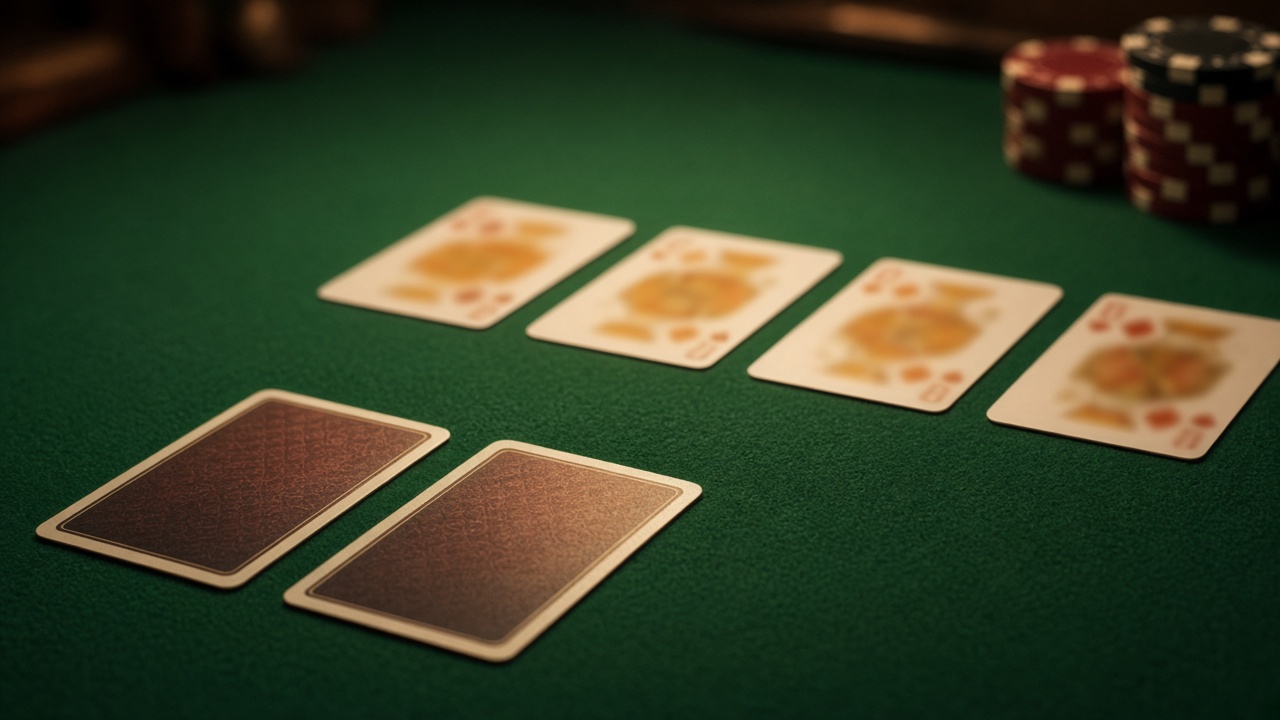
At an ARARAT cash table, hold'em is two cards of yours and up to five shared, a pot that starts with the blinds, and a word about who acts later. I am not handing out a winning system.
Two hidden cards, five shared
You are dealt two cards. Only you see them. Then five community cards come out: three first, then a fourth, then a fifth.
If nobody has folded by the end, the best hand made from your two and the shared cards takes the pot. I am not unfolding a hand chart here, and I am not selling an order that beats the room.
Blinds open the pot
The pot starts with the blinds. The small and the big post before the cards, or the table would sit empty. That is the price of a seat in the hand, not a fine and not a wage.
After that people bet, call or fold. Fold, and you are out of the pot. I do not promise that a tidy blind makes the evening a profit.
Position without a winning course
Position is who speaks later. After the community cards, the button acts last and has already seen what others did. An early seat speaks sooner and sees less.
This is not a solver and not an income plan. Omaha is a different game, with a different set of cards, and it belongs in a different piece. This is hold'em at the cash table only.
Where people usually get burned
- Mixing up your two cards with the five shared ones.
- Playing without looking at the blind, then wondering where the stack went.
- Treating a late seat as a secret system for winning.
Questions from the table
How many cards do I hold?
Two hole cards of yours. Up to five community cards: three, then one more, then the last.
Is this a course on how to beat the table?
No. This is how cash hold'em is built at ARARAT. There is no win on a schedule. Poker does not replace a job.
Is Omaha covered here?
No. Omaha is a different game and a different piece. This one is hold'em at the cash table.